Telephone Numbers
Telephone Numbers
For detailed information +90 542 381 3868'Call.
Dubai offers a variety of work permits tailored to different employment scenarios, including:
To be eligible for a Dubai work permit, applicants must generally meet specific criteria, such as:
Before you can obtain your official Dubai work visa (often called a Labour Card or Work Permit), you must first secure an Entry Permit, an Emirates ID, and a Residence Visa. Navigating this multi-step process can seem complex, but by following these steps, you can ensure a smooth transition into your new career in Dubai.
The most crucial requirement for a work visa is, unsurprisingly, proof of employment in the form of a job offer or employment contract. Fortunately, many of the documents required for your work permit are also needed for your residence visa, which helps streamline the process.
Before you can apply for a work visa, your employer must first secure an Entry Permit on your behalf from the Ministry of Labour. This document is also known as the "pink card." Once approved, your Entry Permit is valid for two months from the date of issue and allows you to enter the UAE and stay for thirty days. The entry permit can be renewed twice if needed.
Once you have successfully arrived in Dubai with your entry permit, your employer can initiate the process for your residence visa. You have a sixty-day window to complete all the necessary paperwork.
One of the first steps is to visit an Emirates ID service center to begin your application. You will need to bring your original passport and your entry permit visa. Following this, you will need the documents below to complete your residence visa application.
A valid health certificate is mandatory for anyone applying for a residence permit. This process requires the applicant to undergo a medical check-up at a government-approved hospital or health clinic. The tests must be conducted within the UAE; results from abroad are not accepted. Your employer can advise on recommended clinics and hospitals.
During the medical check, you can expect to have a chest X-ray and blood tests. These tests screen for certain communicable diseases such as HIV/AIDS, leprosy, hepatitis, and tuberculosis. Any positive results will terminate your residence visa application process, and you will be required to leave the country immediately. There is currently no appeal process for this decision. If you have concerns that you might test positive for any of these conditions, it is highly advisable to speak with your family doctor in your home country. Simple tests can provide peace of mind or at least let you know where you stand before you relocate to Dubai.
With your entry permit, Emirates ID, and residence visa in hand, you have almost everything you need to finalize your work permit application. You will also need to provide the following:
It typically takes about ten working days to receive your Dubai work visa after all documents have been submitted. During the approval process, the Ministry of Labour partly bases its decision on confirming that there are no local citizens available to perform the job in question.
Please note that all forms and documents submitted must be written in Arabic or supported by a notarized translation.
Fortunately, if you only want to visit Dubai as a tourist, the visa application process is much simpler. For many nationalities, visas are granted on arrival at the airport. This visa allows individuals to be in Dubai for 30 or 90 days within a 365-day period, but not for employment purposes. However, you can use a tourist visa to search for a future employer or attend meet-and-greet style visits. Even if you receive a job offer, you cannot begin working until you have obtained your official work permit. While it is theoretically possible to upgrade from a tourist visa to a work visa within Dubai, this depends heavily on timing. In some cases, you may be required to exit the country and re-enter on your new entry permit to proceed with your work visa.
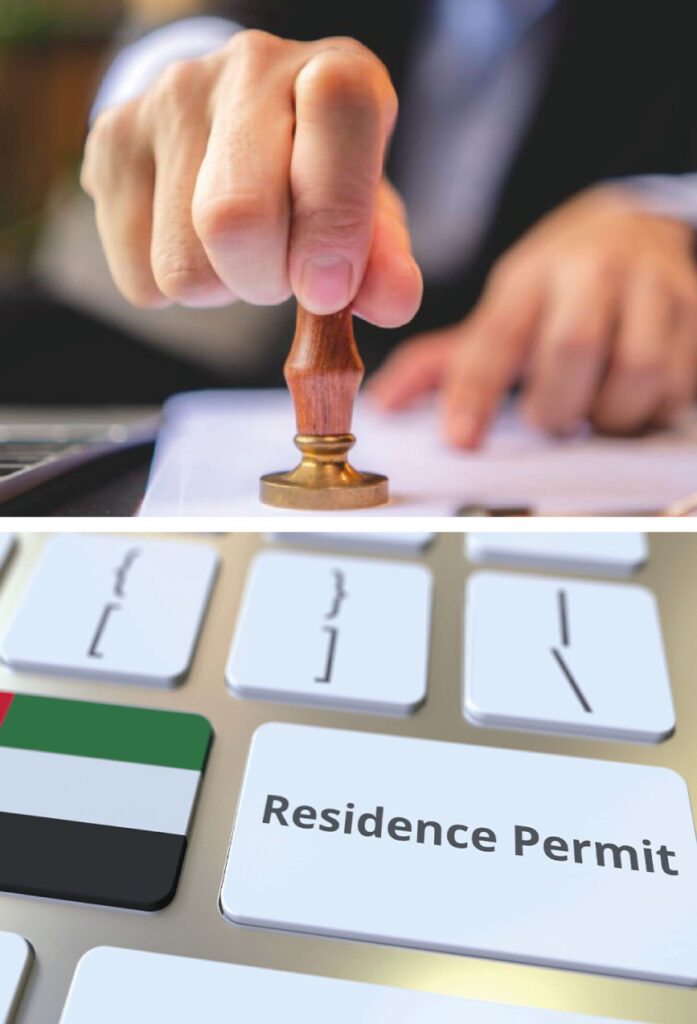
A Dubai work permit is the official document issued by the United Arab Emirates (UAE) government that grants foreign nationals the legal right to work within the Emirate. Whether you are targeting a role at a multinational company, freelance status, or an investor profile, you cannot be legally employed in Dubai without a valid work permit. This 2026 guide walks you through the application steps, permit types, current official fee ranges, and the full process from start to finish.
A Dubai work permit is regulated by the UAE Ministry of Human Resources and Emiratisation (MOHRE) and is also known as a “labour card.” It formalises the employment relationship between employer and employee and forms the basis for the employee’s residence visa. To work legally in Dubai, three components are usually required together: an entry permit visa, an Emirates ID card, and a residence visa tied to the work permit.
For those working in free zones, the permit is processed through the relevant free zone authority; for mainland roles, it is handled directly through MOHRE. This distinction affects both how the process runs and the fee structure.
As of 2026, MOHRE offers 13 distinct work permit types designed to cover different employment scenarios for private-sector establishments. The most commonly used categories are summarised below:
| Permit Type | Who It Suits |
|---|---|
| Employment Visa | Employees with a job offer from an employer |
| Investor / Partner Visa | Entrepreneurs founding or joining a company |
| Freelance Permit | Independent professionals |
| Temporary Work Permit | Short-term / project-based assignments |
| Mission Visa | One-off, fixed-term assignments |
To qualify for a Dubai work permit, the applicant must meet certain conditions:
MOHRE classifies workers into skill levels 1 to 5 based on education and occupation group. Higher skill levels generally attract lower permit fees, and this classification affects both the fee and certain procedures.
The process begins when you receive a job offer from a Dubai employer. The employer issues an offer letter through MOHRE and provides a No Objection Certificate (NOC) where needed. During approval, the ministry also assesses whether a suitable local candidate is available for the role.
Before the work visa, you need an entry permit visa issued by the ministry. Also referred to as a “pink visa,” it is valid for a set period from the date of issue and allows you to enter the country.
After arriving in Dubai, you apply for the Emirates ID and complete a medical fitness test (chest X-ray and blood tests) at a government-approved centre. Tests must be carried out inside the UAE; results brought from abroad are not accepted.
Once all steps are complete, the employer finalises the work permit and the linked residence visa. Mainland standard employment visas are generally valid for two years and are renewable.
Official documents may need to be in Arabic or supported by a notarised Arabic translation.
The table below shows approximate official fee ranges for the main cost items as of July 2026. The final amount varies according to company classification (A, B, C), skill level, and the free zone / mainland difference.
| Item | Approx. Amount (AED) |
|---|---|
| Work permit (issue/renewal) | 250 – 3,450 |
| Entry permit visa | 200 – 700 |
| Medical fitness test | 250 – 350 |
| Emirates ID | 370 + |
Processing time: Work permit approval usually takes around ten business days; the total process may vary depending on document completeness and the company’s classification.
One of Dubai’s most attractive features for international professionals is the 0% personal income tax on employment income. This applies to both UAE nationals and foreign employees and provides a significant advantage in terms of net income. For matters such as incorporation and corporate tax, we recommend seeking professional advice to assess the current regulations.
Whether the company you work for is registered in a free zone or on the mainland directly affects your work permit process. Free zone companies operate with their own visa quotas and procedures set by the relevant authority; the process is usually more standardised because it runs through a single body. Mainland companies, on the other hand, report directly to MOHRE and are subject to a local labour market assessment.
Which model suits you depends on your industry, client base and long-term goals. A mainland structure offers direct access to the UAE market, while a free zone model can provide 100% foreign ownership and sector-specific advantages. Choosing the right structure shapes both your permit costs and your operational flexibility.
Alongside the standard work permit, Dubai offers the Golden Visa programme, which grants long-term residence to qualified professionals, investors and specialists. Because the Golden Visa provides multi-year residence without being tied to a single employer, it is an attractive option for senior professionals and entrepreneurs seeking career flexibility. Eligibility is assessed against specific income thresholds, investment amounts or professional achievement criteria.
Golden Visa holders can sponsor family members and, under certain conditions, retain their residence rights even after extended periods outside the country. This programme offers more independence than a traditional work permit; however, its eligibility criteria and application processes differ. A professional assessment is recommended to clarify which visa type fits your profile.
Once you hold a valid work permit and residence visa, you may sponsor your spouse and children provided you meet certain income conditions. Family sponsorship typically requires a minimum salary threshold, suitable housing arrangements and attested marriage/birth certificates. Sponsored family members must also pass the medical fitness test and apply for an Emirates ID.
Family members’ residence visas are tied to the sponsor’s residence visa and are renewed together with it. When planning your work permit process, it is therefore important to consider your family’s visa timeline as well, to avoid any future gaps in status.
The work permit and the linked residence visa are time-limited documents and must be renewed before they expire. The renewal process involves up-to-date medical fitness and document checks, similar to the initial application. Allowing the permit to lapse can lead to administrative fines and loss of status, so the timeline must be tracked carefully.
When the employment relationship ends, the work permit and residence visa are cancelled. After cancellation, a grace period is granted to find a new employer or leave the country. Because when this period starts and how long it lasts can vary under the regulations, it is important to confirm the current rules to maintain your status without interruption.
With its tax-free employment income, strategic geographic location, advanced infrastructure and multinational business environment, Dubai is one of the leading destinations for global talent. Strong airline connectivity, safe living conditions and a dynamic economy make Dubai attractive for both short- and long-term career plans. A career journey that starts with the right permit type lets you make the most of these advantages.
Arriving in Dubai on a tourist visa and starting to work while awaiting the work permit is a common and risky mistake. Although a tourist visa can, in theory, be converted to a work visa, this depends on timing and regulations. It is essential to coordinate permit steps with your employer, prepare documents fully, and avoid starting the employment relationship before official approvals are complete.
Planning the process correctly is critical to a safe start to your career in Dubai. Our expert team can guide you through both the work permit and company formation steps. You can learn more about setting up a company in Dubai or contact us to plan the process together.
Work permit approval usually takes around ten business days. The total time — including the entry permit, medical test and Emirates ID steps — may vary depending on document completeness and the employer’s company classification.
According to official data, issuing and renewing a work permit ranges from approximately AED 250 to AED 3,450. The final amount depends on the company classification (A, B, C) and the employee’s skill level. Additional fees apply for the entry permit, medical test and Emirates ID.
No. A tourist visa does not allow you to work for employment purposes. Even with a job offer, you cannot start working until your work permit is approved. Visa conversion is possible in some cases but depends on timing and regulations.
Personal income tax on employment income is 0%, and this applies to both UAE nationals and foreign employees. For other matters such as corporate tax, professional advice is recommended to assess the current regulations.
A passport valid for at least six months and photographs, a signed employment contract, educational and professional qualification certificates, the sponsor company’s trade licence and a medical fitness certificate are the core documents. Documents may need to be submitted in Arabic or with a notarised Arabic translation.

 +90 542 381 3868
 +971 58 5204103