Telephone Numbers
Telephone Numbers
Samoa is a South Pacific jurisdiction chosen by entrepreneurs for its territorial tax treatment, flexible corporate structures and registration that can be completed in a matter of days. This guide covers the formation steps, the official SIFA fee schedule, the tax reform enacted in January 2026, bank account options and the risks worth knowing before you commit.
Samoa was removed from the EU list of non-cooperative tax jurisdictions on 17 February 2026, while the status-based tax exemption for international companies ends on 1 January 2028. Because both facts change how the structure should be planned, we recommend reviewing your case with the World Company Setup team before filing.
Last updated: July 2026
For detailed information +90 542 381 3868'Call.
Set Up Your Company in Samoa with Support from World Company Setup World Company Setup, a consulting firm specializing in company formation worldwide, can provide you with professional support for company formation in Samoa and help you set up your business quickly and smoothly.
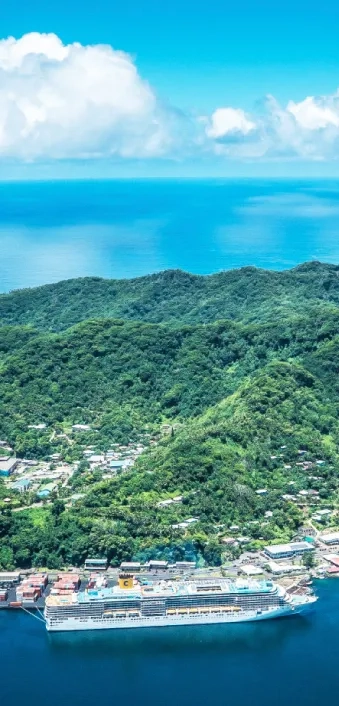
Samoa is a South Pacific jurisdiction whose offshore register is administered by the Samoa International Finance Authority (SIFA) through the Registrar of International and Foreign Companies. Non-resident owners use the International Company (IC), created under the International Companies Act 1988 and commonly referred to as an IBC. The company is a separate legal person, shareholder liability is limited to the unpaid amount on shares, and ownership must be entirely foreign.
Two points decide whether Samoa fits your plan. First, an IC is built for business carried on outside Samoa; it cannot trade with residents or own local property. Second, the status-based tax exemption that defined the IC for decades ends on 1 January 2028 under legislation enacted in January 2026, so any long-term structure needs to be planned around that date.
SIFA recognises three forms under the ICA 1988. Choosing the wrong one is a common and avoidable mistake.
| Structure | What it is | Typical use |
|---|---|---|
| International Company (IC / IBC) | Limited by shares, by guarantee, or by both | International trading, holding, IP and asset protection |
| Limited Life International Company (LLIC) | Formed for a defined duration; shares cannot be issued before consideration is paid | Joint ventures and fixed-term projects |
| Foreign Company | Registration in Samoa of a company incorporated elsewhere | Establishing a Samoan presence for an existing entity |
Note: None of these forms may trade in the Samoan domestic market. If you intend to sell to residents or hold local real estate, a separate local company is required.
| Requirement | Position under the ICA 1988 |
|---|---|
| Minimum capital | None. Shares may have par value, no par value, or a combination |
| Share currency | Any currency except the Samoan tala; multi-currency permitted |
| Directors | One is sufficient; no residency requirement; a company may act as director |
| Shareholders | One is sufficient; individuals or corporate bodies; no resident may hold shares |
| Company secretary | Mandatory; need not be resident. If none is appointed, the registered agent acts |
| Registered office | Must be at the premises of a SIFA-licensed trustee company |
| Public register of owners | No. Director and shareholder details are not published |
| Annual return to the Registrar | Not required, except for licensed banks and insurers |
A foreign owner cannot file directly with the Registrar. Every application is lodged by a licensed trustee company, which also provides the registered office and acts as registered agent.
The whole sequence is normally completed remotely. Documents are signed electronically where permitted and couriered for wet-ink signatures where a bank insists.
This is the part most people underestimate. Samoa companies rarely bank in Samoa; accounts are opened in international banking centres or with licensed electronic money institutions. Approval is never guaranteed and depends on the bank’s own compliance assessment.
In practice the most workable routes are the United Arab Emirates, Singapore, Hong Kong and Mauritius, alongside European licensed EMIs for companies that mainly need multi-currency payment rails. If Dubai is your preferred route, see our offshore bank account opening consultancy in Dubai.
Ongoing compliance is light compared with an onshore company, but it is not optional. Losing the trustee relationship or missing a renewal is the most frequent cause of frozen accounts.
| When | What has to happen | Who handles it |
|---|---|---|
| Before each incorporation anniversary | Payment of the annual licence fee | Company, via the registered agent |
| Annually | Statement of financial position filed at the registered office | Directors |
| Ongoing | Share register, director records and minutes kept up to date | Company secretary |
| Ongoing | Beneficial ownership information held with the trustee company | Registered agent |
| On change | Notification of changes to address, directors or capital | Registered agent |
| As requested | KYC refresh for the bank or EMI | Authorised signatory |
Substance tests are limited to defined relevant activities: banking, insurance, fund management, finance and leasing, headquarters services, shipping, pure holding, distribution and service centres, and intellectual property. A straightforward trading, services or investment company sits outside those categories. If your activity is close to the line, take advice before incorporating rather than afterwards.
The appeal of Samoa is a combination of statutory privacy, structural flexibility and speed rather than any single headline benefit.
Accuracy matters here, because a great deal of published material about Samoan tax is out of date or simply wrong. Two separate systems have to be kept apart: the treatment of international companies, and the ordinary Samoan domestic tax system.
An international company is exempt from Samoan income and corporation tax on foreign-sourced income, and from stamp duty on its transactions, profits, dividends and interest, provided its shares are beneficially owned by non-residents or other international companies. There is no capital gains tax and no withholding tax on outbound dividends, interest or royalties at company level. Samoa has no double tax treaty network, so an IC cannot claim treaty relief against withholding tax imposed in a counterparty’s country.
Claims that “Samoa has no VAT” or “Samoa has no corporate tax” are incorrect as general statements. According to the Samoa Ministry for Revenue, a resident company is taxed at 27% on its worldwide taxable income and a non-resident company at 27% on Samoan-source income. VAGST, the value added goods and services tax, applies at 15% on most goods and services supplied in Samoa and on most imports. These rules govern the domestic market, not the offshore activity of an IC.
| Tax | Rate | Applies to |
|---|---|---|
| Company income tax (resident) | 27% | Worldwide taxable income of Samoan resident companies |
| Company income tax (non-resident) | 27% | Samoan-source taxable income |
| VAGST | 15% | Most goods and services supplied in or imported into Samoa |
| International company income tax | Exempt until 1 Jan 2028 | Foreign-sourced income of an IC with non-resident ownership |
| Capital gains tax | None | – |
| Withholding tax at IC level | None | Outbound dividends, interest and royalties |
Sources: Samoa Ministry for Revenue published rates; Samoa International Finance Authority guidance on international companies.
In January 2026 the Samoan Parliament passed the Miscellaneous (Removal of Tax Exemption for International Companies) Amendment Act No. 1 of 2026. It removes the status-based exemptions previously granted under the International Companies Act 1988 and related legislation. On 17 February 2026 the Council of the European Union removed Samoa from its list of non-cooperative tax jurisdictions, where it had been placed in 2017.
| Item | Before 2026 | 2026 transition | From 1 January 2028 |
|---|---|---|---|
| IC income tax | Status-based full exemption | Exemption still applies | Status-based exemption removed |
| EU Annex I listing | Listed since 2017 | Removed on 17 Feb 2026 | Not listed |
| Resident company tax rate | 27% | 27% | 27% |
| VAGST | 15% | 15% | 15% |
| Planning certainty | Open-ended | Defined end date | Replacement regime to be confirmed |
What this means in practice: The reputational obstacle has been removed, which helps with banking. The tax advantage now has an expiry date, which means the structure should be justified by commercial substance rather than by exemption alone.
| Jurisdiction | Indicative all-in setup cost | What it is known for |
|---|---|---|
| Samoa | USD 8,000 – 15,000 | Flexible IC framework under SIFA and the ICA 1988, statutory privacy |
| Marshall Islands | USD 8,000 – 12,000 | Strong anonymity, low annual maintenance |
| Cayman Islands | USD 5,000 – 10,000 | Highest standing with institutional investors and funds |
| Belize | USD 4,000 – 8,000 | Lowest entry cost, fastest onboarding |
Figures reflect the market as at July 2026 and vary by provider and scope. Official government fees are published separately and are set out below.
| Use case | Fit | Comment |
|---|---|---|
| International trade and intermediation | Good | Works where contracts and invoicing are structured properly |
| Consulting and services to non-resident clients | Good | EMI accounts are often more practical than banks |
| Group holding and share ownership | Good | An IC may hold shares in other international companies |
| Intellectual property ownership | Conditional | Economic substance requirements may be triggered |
| E-commerce with card acquiring | Difficult | Payment providers apply enhanced review |
| Crypto, forex, online gaming | Very difficult | Correspondent banks restrict these sectors |
| Trading with Samoan residents or local property | Not permitted | An IC cannot operate in the domestic market |
| Banking, insurance, fund management | Separate licence required | IC status alone is insufficient |
An IC may not invest in a domestic company, trade with residents, acquire local real estate, or settle property with residents. It may, however, hold shares in other international companies, which is why Samoan holding structures work. No shareholder may be resident in Samoa.
Total cost has two components: fixed official fees set by SIFA, and the fees charged by the licensed trustee company and your adviser. The official side is public and identical for everyone.
| Registration type | Application / licence (USD) | Annual renewal (USD) |
|---|---|---|
| International Company | 300 | 300 |
| Long-term registration – 5 years | 1,000 | 1,000 |
| Long-term registration – 10 years | 1,500 | 1,500 |
| Long-term registration – 20 years | 2,000 | 2,000 |
| Re-domiciled company | 100 | 100 |
| Foreign Company | 300 | 300 |
| Limited Life International Company | 300 | 300 |
| Foundation | 200 | 200 |
| International Partnership / Limited Partnership | 150 | 150 |
Source: Samoa International Finance Authority official fee schedule. Fees are subject to change; confirm before filing.
The registration fee is only the filing charge. The remainder covers the mandatory SIFA-licensed trustee company that provides the registered office and registered agent, KYC and source-of-funds work on every officer and beneficial owner, notarisation and apostille of documents, bank or EMI application support, and annual administration including renewal tracking and the statement of financial position. Quotes that look unusually low usually exclude the registered agent fee, apostilles or banking support, so compare first-year and second-year totals separately. You can request a written breakdown through our quote and consulting page.

The all-in cost of setting up an offshore company in Samoa generally falls between USD 8,000 and USD 15,000, depending on the provider and the services you actually need. The official SIFA registration fee is USD 300 and is included in that figure; the balance is professional and administrative work.
| Cost item | How it is treated |
|---|---|
| Government registration fee (USD 300) | Included in the total |
| Registered agent and registered office (annual) | Included in the total |
| Document preparation, apostille and notarisation | Priced on request |
| Bank or EMI account application support | Priced on request |
| Annual renewal and administration | Quoted separately |
Before you compare quotes: Ask for the first-year and second-year totals separately, and check whether the registered agent fee, apostilles and banking support are inside or outside the package.
Rates and amounts reflect market conditions as at July 2026. Official fees and professional charges change over time, so confirm current figures with the relevant authority and provider before proceeding.
For a written quotation tailored to your business model: Set Up Your Company in Samoa – Get an Offer Now
Samoa is rarely the only option worth looking at. If you want to compare jurisdictions or broaden the structure, these pages are the logical next step: company formation in the Marshall Islands for shipping and vessel registration, company formation in Belize for a straightforward trading vehicle, company formation in Panama for foundations and succession planning, and Cayman company registration for fund structures aimed at institutional investors.
If your business needs treaty access, a VAT number or real presence, look at company formation in Hong Kong, company formation in Singapore or company formation in Dubai instead. For banking, our offshore bank account opening consultancy in Dubai covers the option most Samoa clients end up using.
Registration itself usually completes within one to five business days once KYC clearance is finished; name approval is obtained at the start and a reserved name can be held for up to three months. Opening a bank or EMI account is a separate exercise that depends on the institution’s compliance review and can take several weeks. Planning the combined “company plus account” timeline as one to three weeks is realistic.
There is no minimum capital requirement for an international company in Samoa. Shares may carry a par value, no par value, or a combination, and may be expressed in any currency other than the Samoan tala. A company can be formed with a single issued share and there is no obligation to pay up capital.
International companies are not required to file annual returns or audited financial statements with the Registrar; that obligation applies only to licensed banks and insurers. Directors must nevertheless keep accounts sufficient to reflect the company’s financial position, and a statement of financial position is filed at the registered office each year. Reporting duties may change when the new tax regime takes effect on 1 January 2028.
For each director, shareholder and beneficial owner: a certified passport copy, proof of address issued within the last three months, and a short professional profile. At company level: the proposed name, the Memorandum and Articles of Association, notice of registered office at the trustee’s premises, and a declaration of capital particulars. All filings are made by a SIFA-licensed trustee company on your behalf.
A local director is not required. One director is sufficient, with no residency or nationality restriction, and a corporate body may act as director. However, every international company must appoint a company secretary and must maintain either a resident secretary or a resident agent, a role performed by a SIFA-licensed trustee company. The registered office must be at the trustee’s premises.
The International Companies Act 1988 recognises three forms: the International Company (limited by shares, by guarantee, or by both), the Limited Life International Company, and the Foreign Company, which is the registration in Samoa of an entity incorporated elsewhere. The International Company, widely called an IBC, is the structure almost all non-resident owners use. None of these forms may trade in the Samoan domestic market; a separate local company is required for that.
No. The Council of the European Union removed Samoa from its list of non-cooperative tax jurisdictions on 17 February 2026. Samoa had been listed since 2017. The removal followed the enactment in January 2026 of legislation abolishing the status-based tax exemption for international companies. Practically, this improves how compliance teams at banks and payment institutions score a Samoan company.
Under the Miscellaneous (Removal of Tax Exemption for International Companies) Amendment Act No. 1 of 2026, the status-based full exemption for international companies ends on 1 January 2028. The exemption continues to apply until that date. Because the replacement treatment has not yet been fully published, verify the current position before building a long-term structure on the exemption.
According to the Samoa Ministry for Revenue, a resident company is taxed at 27% on worldwide taxable income and a non-resident company at 27% on Samoan-source income. VAGST applies at 15% to most goods and services supplied in or imported into Samoa. These rates govern the domestic system; they do not apply to the foreign-sourced income of an international company while the exemption is in force.
SIFA’s published schedule sets the registration fee for an international company at USD 300, with an annual renewal fee of USD 300. A re-domiciled company pays USD 100. Long-term registrations cost USD 1,000 for five years, USD 1,500 for ten years and USD 2,000 for twenty years. Foundations are USD 200 and international or limited partnerships USD 150. Trustee and advisory fees sit on top of these amounts.
Yes. The process runs entirely through a licensed trustee company, so travel to Samoa is not required. Documents are signed electronically where permitted and couriered for wet-ink signatures where a bank insists. The certificate of incorporation, Memorandum and Articles, resolutions, share certificates and any apostilled copies are delivered as a digital pack for your bank application.
Some payment institutions apply enhanced document and compliance review to offshore-registered companies, and in certain cases decline the application. Acceptance policies at providers such as Stripe and PayPal change over time, so confirm current terms directly with the provider before applying, and consider licensed EMIs that specifically serve offshore entities as an alternative.
Both offer comparable tax treatment. The Marshall Islands is often marginally cheaper to maintain annually, while Samoa’s SIFA and ICA 1988 framework is more familiar to some service providers and now benefits from the EU delisting. The right answer depends on your banking priority, budget and business model. Compare our page on company formation in the Marshall Islands.
Yes. Forming a company under the International Companies Act 1988 and using it for international trade is lawful. What matters is how the structure is used: your reporting and tax obligations in the country where you are tax resident continue to apply, including controlled foreign company rules where they exist. Take local advice on disclosure before you incorporate.
Rarely in Samoa itself. In practice accounts are opened in international banking centres such as the United Arab Emirates, Singapore, Hong Kong and Mauritius, or with European licensed electronic money institutions where multi-currency payment rails are the main requirement. Approval always depends on the institution’s own compliance assessment and cannot be guaranteed.
An international company may not invest in a Samoan domestic company, trade with residents, acquire local real estate, or settle property with residents. No shareholder may be resident in Samoa. It also cannot carry on banking, insurance, reinsurance, fund management, collective investment scheme management or trusteeship without the relevant licence. It may hold shares in other international companies, which is why Samoan holding structures work.
 +90 542 381 3868
 +971 58 5204103